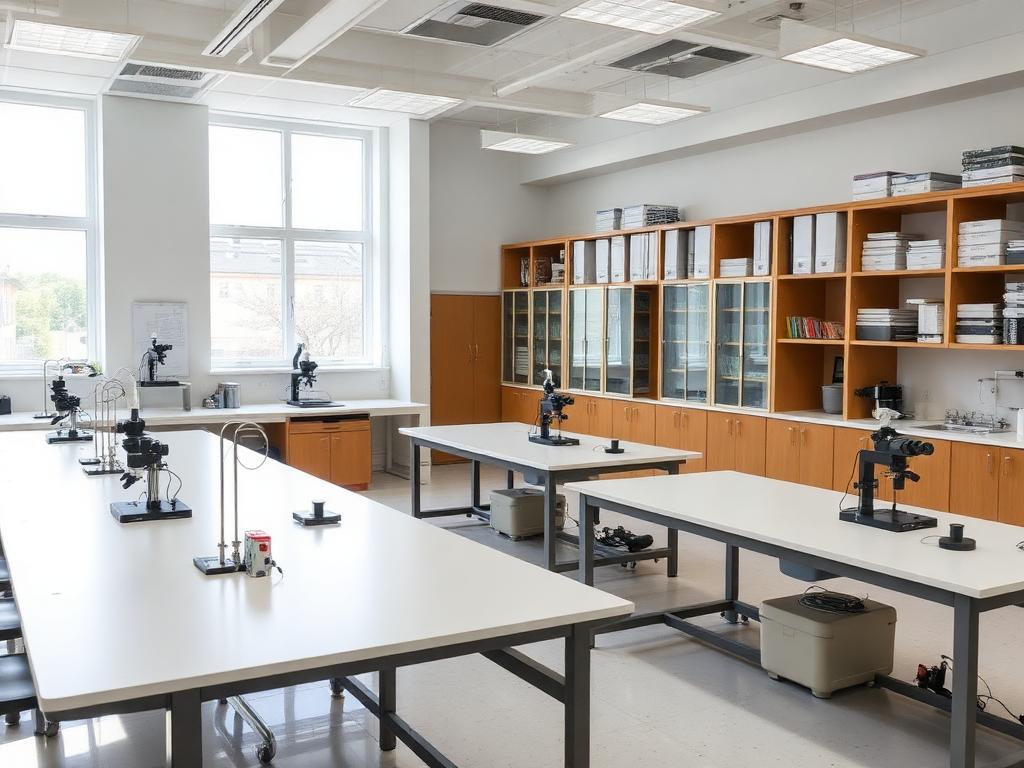
Composite Science Lab Setup for Schools
Composite science lab setup for schools combining physics, chemistry and biology equipment in one shared learning space, with apparatus, glassware, models, storage and safety essentials.
Key Features
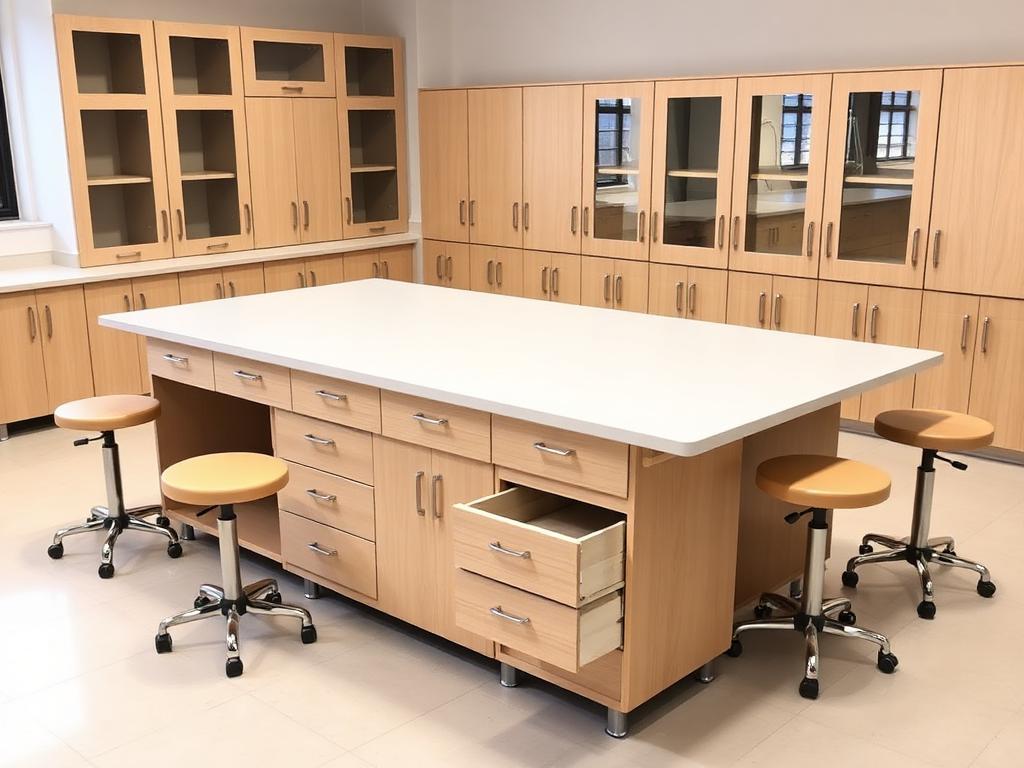
Balance Shared Equipment Across Science Subjects
A composite science lab brings multiple subject activities into one room. Plan the shared inventory so physics, chemistry and biology equipment is accessible, safely stored and available when classes rotate through practical sessions.
Map the physics, chemistry and biology practical activities that will use the shared room.
Separate common equipment from subject-specific apparatus, glassware and materials.
Plan storage, labels and access so different classes can move between activities safely.
Check water, power, ventilation, fire-safety and first-aid arrangements against the experiments planned.
Complete Inventory
The list below shows equipment categories and examples for this laboratory. Check final selection and quantities against the school's class levels, practical programme and existing inventory.
General Infrastructure
- Lab tables with reagent racks
- Lab stools
- Sinks with water supply
- Gas burners / spirit lamps
- Exhaust fan / ventilation
- Fire extinguisher
- First-aid box
- Chemical & specimen storage cabinets
Physics Equipment
- Vernier caliper, screw gauge, metre scale
- Spring balance, beam balance, weights box
- Glass prism, lenses, mirrors
- Optical bench (junior)
- Magnets, compass, wires, resistors
- Rheostat, galvanometer, ammeter, voltmeter
Chemistry Glassware
- Test tubes, beakers, conical flasks
- Volumetric flasks, burettes, pipettes
- Measuring cylinders, watch glasses
- Funnels, glass rods, reagent bottles
- Evaporating dishes, crucibles
Chemistry Chemicals
- Acids (HCl, H₂SO₄, HNO₃ – diluted)
- Bases (NaOH, KOH)
- Salts for qualitative analysis
- Indicators (phenolphthalein, methyl orange, litmus)
- Distilled water
- pH paper/kit
Biology Instruments
- Compound & simple microscope
- Slides & cover slips
- Scalpel, scissors, forceps
- Petri dishes, specimen jars
- Stains (safranin, methylene blue)
- Permanent prepared slides
Models & Safety
- Human organ models (heart, lungs, digestive)
- Plant/animal cell models
- Life cycle charts
- Lab coats, gloves, masks, goggles
- Logbooks & observation notebooks
Safety & Best Practices
Composite Lab Setup FAQs
What is a composite science laboratory?
A composite science lab is a shared learning space that organises equipment for more than one science subject, such as physics, chemistry and biology, within one room.
What equipment is included in a composite science lab?
The page inventory groups examples under general infrastructure, physics equipment, chemistry glassware and chemicals, biology instruments, and models and safety materials.
How should a school plan quantities for a shared composite lab?
Use the class timetable and practical programme to estimate how many groups will use each item at the same time. Keep common equipment and subject-specific materials clearly inventoried and stored.
Ready to Set Up Your Composite Lab?
Get a free consultation and custom quote tailored to your school's space and budget.