
Maths Lab Setup for Schools
Maths lab equipment for schools, including 3D geometry models, manipulatives, algebra and number-system kits, mensuration tools, trigonometry models and logic activities.
Key Features
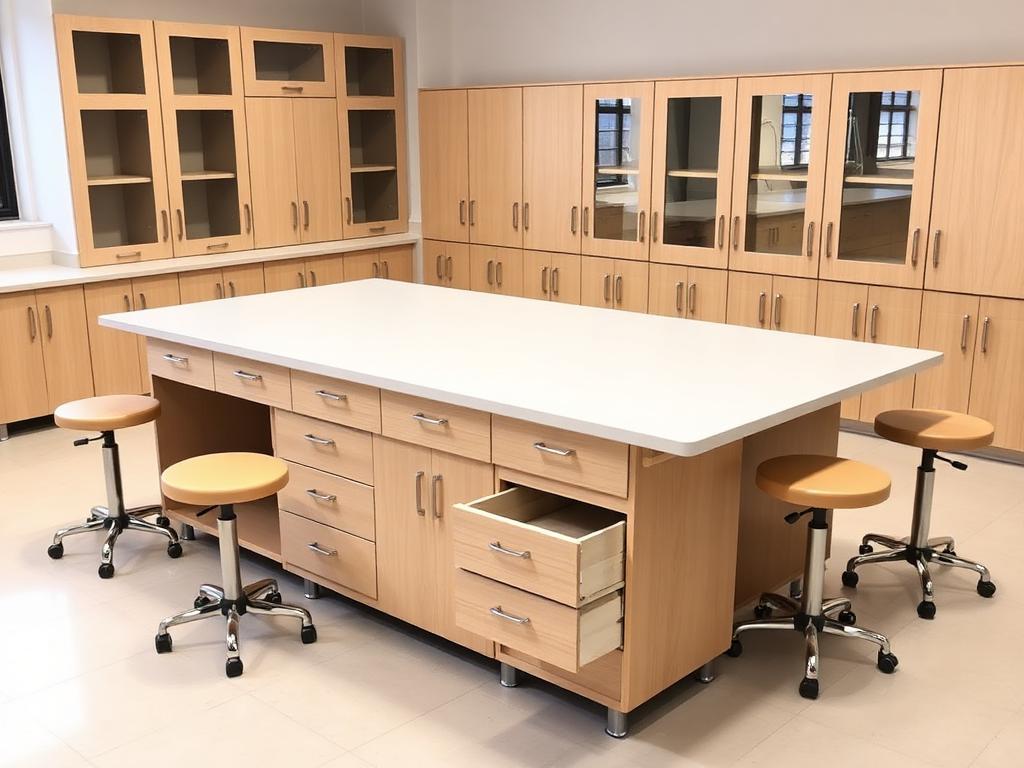
Choose Maths Lab Materials by Concept and Class Level
A maths laboratory is most useful when its models and manipulatives connect to the concepts students are learning. Group the equipment by class level and topic, then plan enough shared sets for the activities and student groups.
Map geometry, number systems, algebra, mensuration, trigonometry, statistics and logic activities.
Select models and manipulatives for the age and class levels using the laboratory.
Estimate set quantities from the number of student groups working at once.
Organise small models, boards and kits so teachers can store and retrieve them easily.
Complete Inventory
The list below shows equipment categories and examples for this laboratory. Check final selection and quantities against the school's class levels, practical programme and existing inventory.
Geometry & Shapes
- 2D geometric shape cut-outs (triangles, squares, polygons)
- 3D models (sphere, cylinder, cube, cone, cuboid, pyramid, prism)
- Geometric solids with removable nets
- Geoboards
- Geometry box sets
- Symmetry mirrors and reflection tools
- Coordinate geometry boards
Algebra & Number System
- Algebraic identity kits
- Polynomial kits
- Factorization and expansion tiles
- Number line models
- Integer kit (positive–negative counters)
- Abacus (junior and senior)
- Base-10 block set (place value kit)
Mensuration & Measurement
- Measuring tapes
- Rulers and scale sets
- Vernier calipers
- Measuring cylinders and containers
- Area and perimeter activity boards
- Fractional parts and fraction circles
Trigonometry
- Trigonometric circle model
- Height & distance demonstration model
- Sine/cosine curve model
- Protractors and clinometers
Statistics & Data
- Graph boards
- Bar graph and pie chart kits
- Probability tools (dice, spinners, coins, cards)
Puzzles & Logic
- Tangram sets
- Sudoku boards
- Pattern blocks
- Logical reasoning puzzles
- Magic squares
- Counting beads / Colour cubes
Maths Lab Setup FAQs
What equipment is commonly used in a school maths lab?
The inventory on this page includes 2D and 3D geometry models, geoboards, algebra kits, abacus and base-ten materials, mensuration tools, trigonometry models, graph kits and logic puzzles.
How can a school choose maths lab kits for different classes?
Start with the topics and activities taught at each level. Select manipulatives that help students represent those concepts and plan quantities for the group size and classroom rotation.
Does a maths laboratory need computers?
Not every activity requires a computer. Start with the physical models and manipulatives needed for the school's maths activities, then add calculators or digital tools where they support the teaching plan.
Ready to Set Up Your Maths Lab?
Get a free consultation and custom quote tailored to your school's space and budget.